The High-Friction Habit: Are You Washing Your Paintwork Raw?
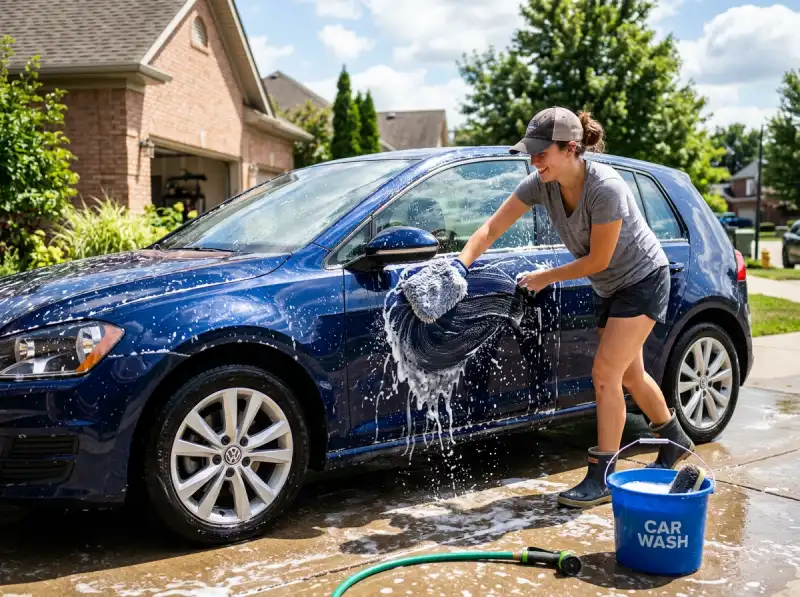
If you love the deep, mirror-like shine of fresh paintwork but are constantly fighting a battle against swirl marks, fine scratches, and paint dullness, you’re caught in a common trap. You diligently apply a quick detailer spray, but your clear coat still scuffs, and your paint feels progressively more scratched with each passing week. The result is the same: you’re achieving a short-term shine at the cost of your car’s long-term paint health, creating a cycle of damage that requires even more polishing to look good.
The fix isn’t just a better paint sealant—it’s a smarter washing strategy. When you learn to use the right washing tools and techniques, you can achieve the gloss you love without scratching your paint, preserving its natural clear coat, strength, and integrity.
The Many Ways Intelligent Washing Techniques Protect The Very Structure Of Your Paintwork.
Harsh scrubbing tools can apply mechanical force that cuts right into your clear coat. When you apply this intense friction to your paintwork, it can cause the abrasive dirt particles trapped on the surface to slice into the clear coat, creating micro-scratches that crack and weaken the paint’s protective barrier. This leads to a loss of gloss, smoothness, and paint protection that is irreversible. A poor washing habit, turn by turn, defies the basic laws of paint care.

Think of your paint like a delicate surface, like polished glass. You wouldn’t scrub a glass window with a steel wool pad on the highest pressure setting; you would use a gentle, lubricated cloth to lift the dirt without scratching. Your paintwork requires the same level of intelligent washing management to avoid being swirled beyond repair.
Below are three simple “pillars” for safer car care: ensuring your paint is completely pre-rinsed, finding your personal “sweet spot” wash mitt, and using a highly lubricated technique.
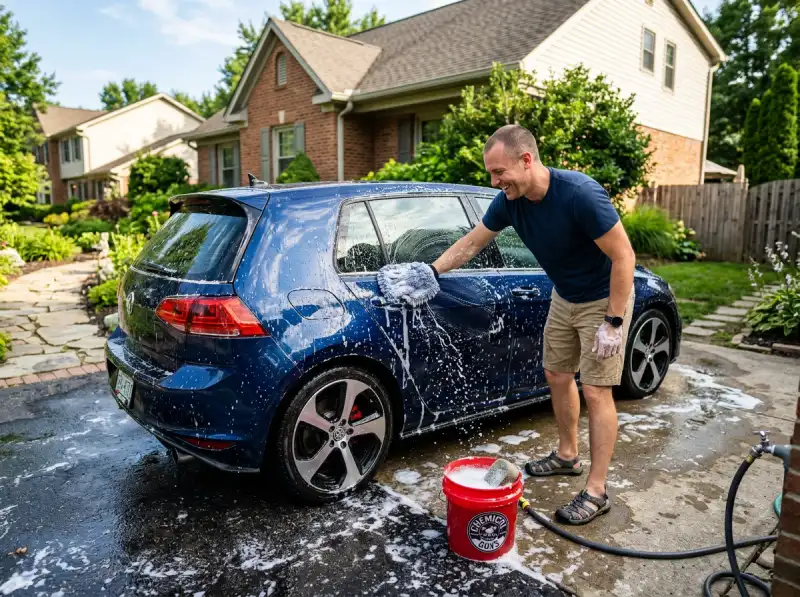
1. A Scratch Is The Sound Of Your Paintwork Screaming.
The single most destructive thing you can do is use a dry sponge or dirty towel on paint that is not 100% pre-rinsed. Even a small amount of trapped road grit will instantly act like sandpaper and cause catastrophic damage to the paint’s clear coat. If you hear a scratching sound or feel resistance, stop immediately. Your paint is not lubricated.
“Clients come in with damage and tell me they always use a premium wax, but then admit they wipe dry paint with a microfiber towel. This means you are literally dragging dirt right across your clear coat. No wax in the world can stop that. Your paint must be completely, totally pre-rinsed before a towel touches it.”
Hairstylist and Educator Brianna Lee
Before you begin washing, make sure your paint is cool to the touch, even the lower panels. A thorough pre-rinse is essential. It may take a few extra minutes, but it will save your paint from the most aggressive and avoidable form of wash damage.
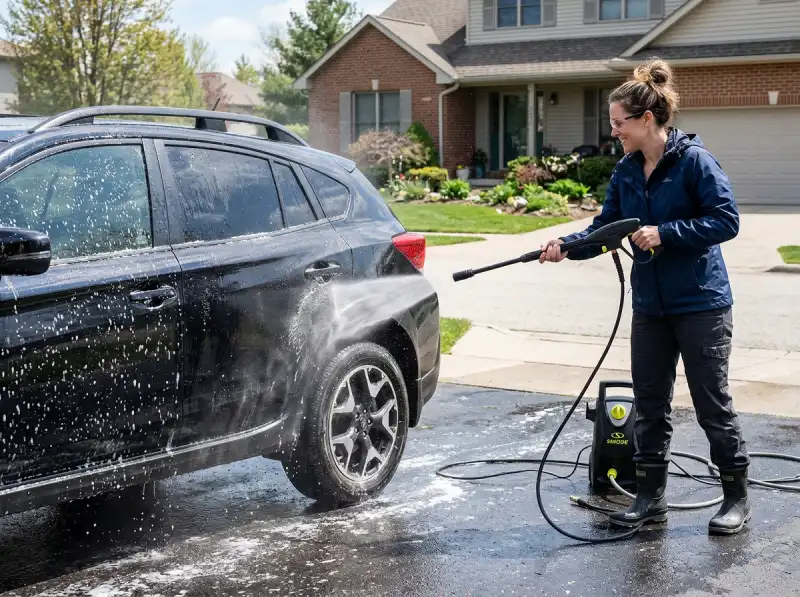
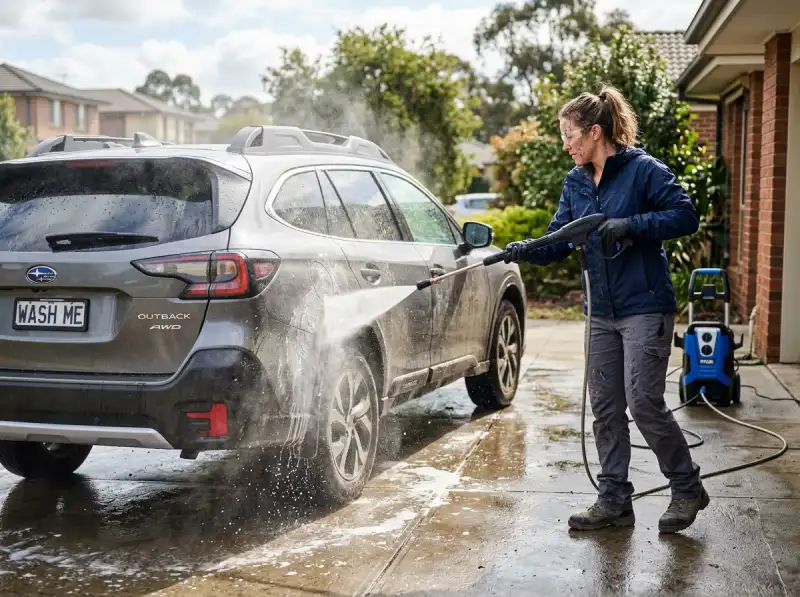
2. Use The Gentlest Effective Wash Pressure, Not The Highest.
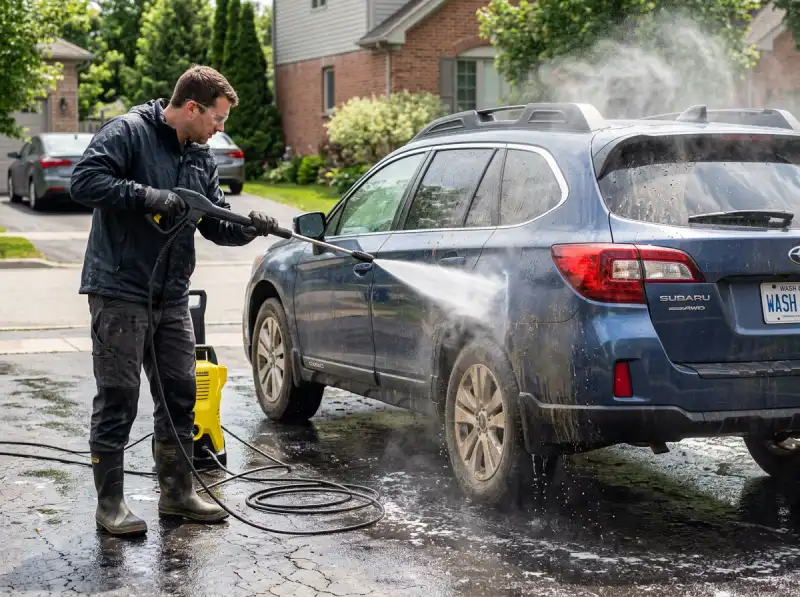
When pressure washers offer a range of pressure levels, many people default to the maximum, thinking more force means better results. This is a myth that leads to unnecessary damage. The most useful approach is to find the lowest possible pressure that effectively cleans your paint in a single pass.
1. For soft or single-stage paint, start below 1000 PSI.
2. For modern, medium-hard clear coats, aim for 1200-1500 PSI.
3. Only heavy mud on trucks might require pressures above 1800 PSI.
4. Test a low pressure first. Only increase it if the dirt isn’t lifting in one pass.

Using excessive pressure doesn’t make your wash faster; it just causes more damage. Finding your pressure washer’s “sweet spot” setting will give you the same beautiful results with significantly less harm to your paintwork.
Is Your Pressure Washer Set To Maximum Pressure?
“I used to crank my pressure washer up to maximum because I thought that’s what I needed to get my car clean. My panels were so chipped. A detailer told me to try a lower nozzle, and I was shocked that my car cleaned just as well at 1200 PSI! My paint is so much smoother and healthier now. I was blasting it for no reason.”

3. One Straight Pass Is Better Than Five Circular Ones.
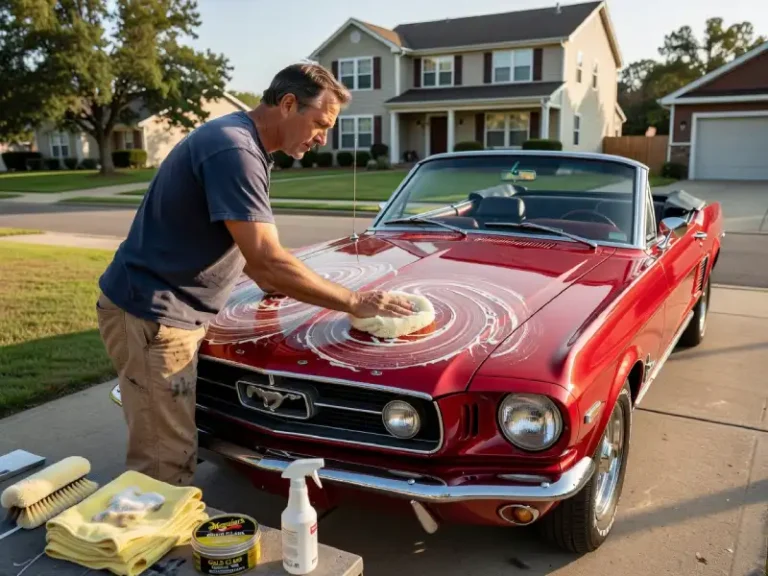
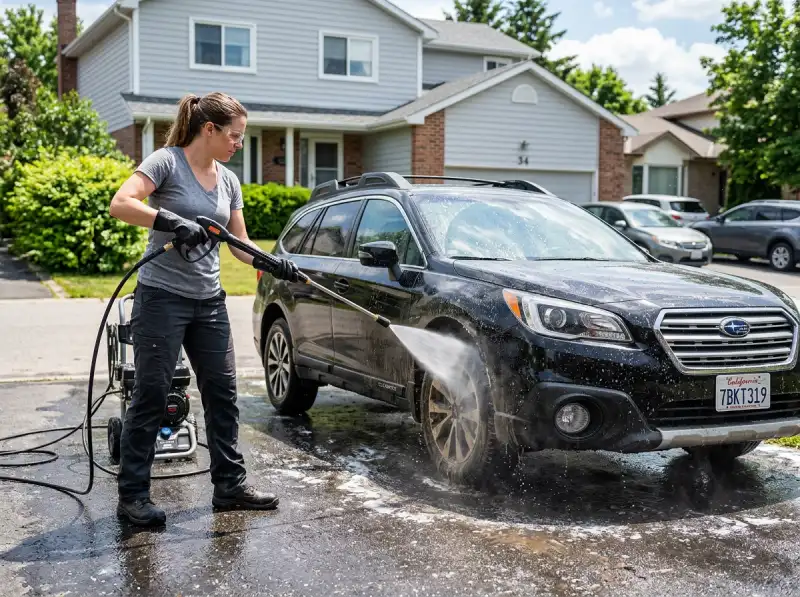
Dragging a wash mitt in circular motions over the same section of paintwork is a huge source of cumulative damage. It’s far better to work in straight, linear lines and use a single, deliberate stroke. This technique lifts the dirt evenly and safely the first time, eliminating the need to drag abrasive grit in circles.
Work in straight lines, not circles, to ensure any minor scratches are less visible.
Maintain light pressure on the wash mitt as you pass it across the panel.
Move the mitt at a slow, steady pace from top to bottom. This is more effective and less damaging than quick, scrubbing motions.
Want a simple rule? Respect the paint. That’s how you achieve the gloss you want without sacrificing the health your paintwork deserves.