The Silent Damage: Are Your Cheap Cleaning Products Ruining Your Car?
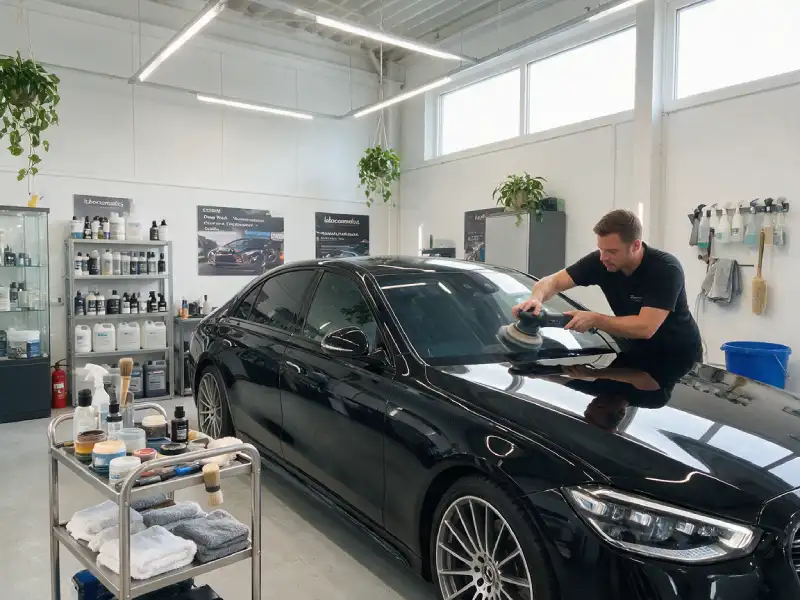
If you’re investing in expensive ceramic coatings and premium waxes to combat swirl marks and paint dullness, the problem might not be what you’re putting on your car—it’s how you’re cleaning it every single day. The result is the same: you’re trying to repair damage with waxes and hand polishes while unknowingly causing it with the wrong cleaning tools, leaving you stuck in a frustrating and costly cycle.
The fix isn’t another miracle product—it’s a change in your physical habits. When you understand that mechanical damage from brushes, sponges, and harsh towels can be just as destructive as road debris, you can finally start preventing damage before it happens.
The Many Ways Gentle Handling Protects Paint Integrity And Promotes Gloss Retention.
When paint is dirty, its clear coat is covered in abrasive micro-particles, making it incredibly vulnerable to scratches and swirls during a wash. This friction and tension strips the paint’s protective outer layer and exposes the raw clear coat to breaking point, leading directly to swirl marks and oxidation that no wax or conditioner can fully mend.
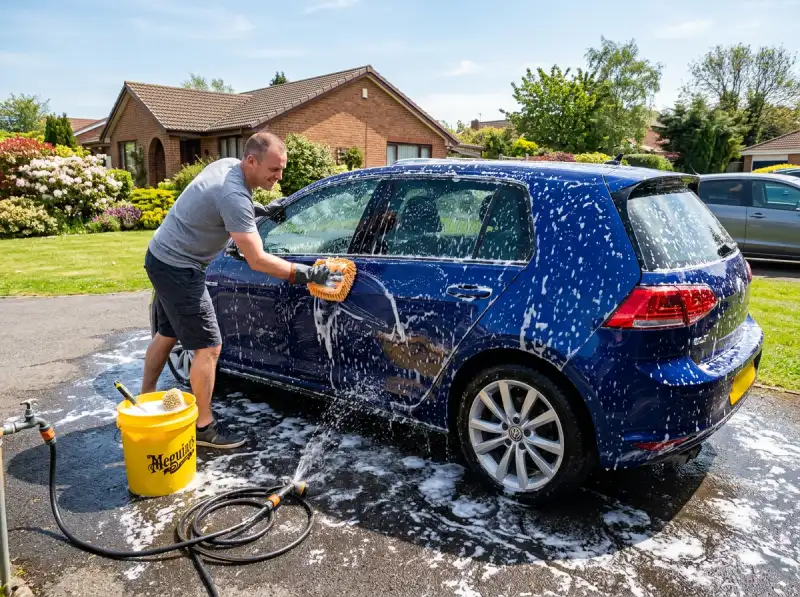
Think of your car’s clear coat like a delicate sheet of glass. You would never scrub it with a rough towel or push a stiff brush through it. You must gently rinse and lubricate it. Your paint, especially when wet, deserves the same delicate care to maintain its strength and integrity.
Below are three simple “pillars” for preventing wash damage: rethinking your towel, mastering safe dirt removal, and choosing paint-friendly accessories for daily maintenance.
1. Your Cotton Towel Is Scratching Your Delicate Clear Coat.
The rough texture of a standard cotton bath towel is a major cause of micro-scratches and swirl marks. Vigorously rubbing your fragile clear coat with it is like taking sandpaper to that delicate paint finish. The friction lifts and tears at the paint’s finish, creating immediate frizz and long-term damage.
“If my clients make only one change, I tell them to stop using their regular bath towel on their paint. Switch to a plush microfiber towel and gently squeeze the water out. This single habit will cut down on swirls and scratches by at least 90%.”
Master Stylist Jenna Peterson
Instead of a rough towel, gently pat excess water from your paint with a plush microfiber towel. This gentle absorption method keeps the paint surface smooth and prevents the friction that leads to micro-scratches.


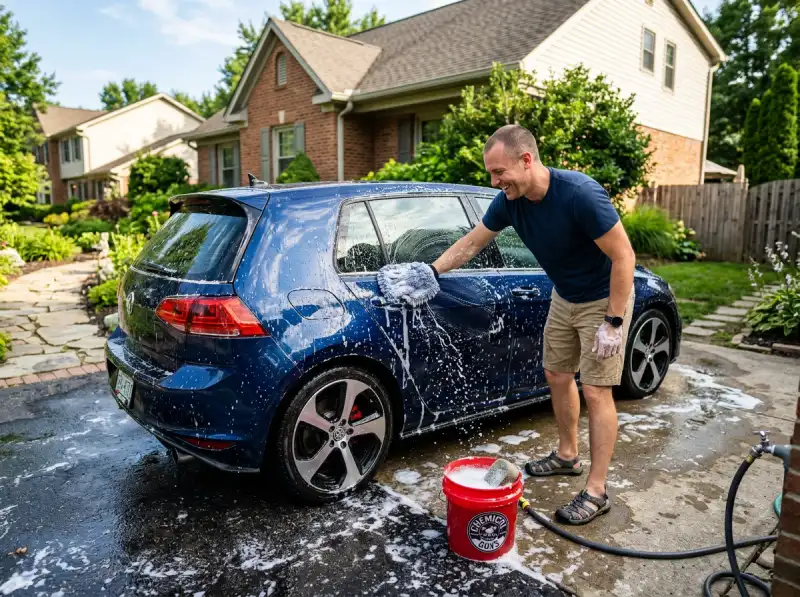
2. Cleaning Dirty Paint Requires Lubrication, Not Force.
Dragging a dry sponge through dirty, dusty paint is a recipe for disaster. When dry, dirt particles act like tiny rocks. The most useful approach is to use a dedicated pre-wash foam and a technique that works with your paint, not against it.
1. Apply a dedicated pre-wash foam to provide slick lubrication.
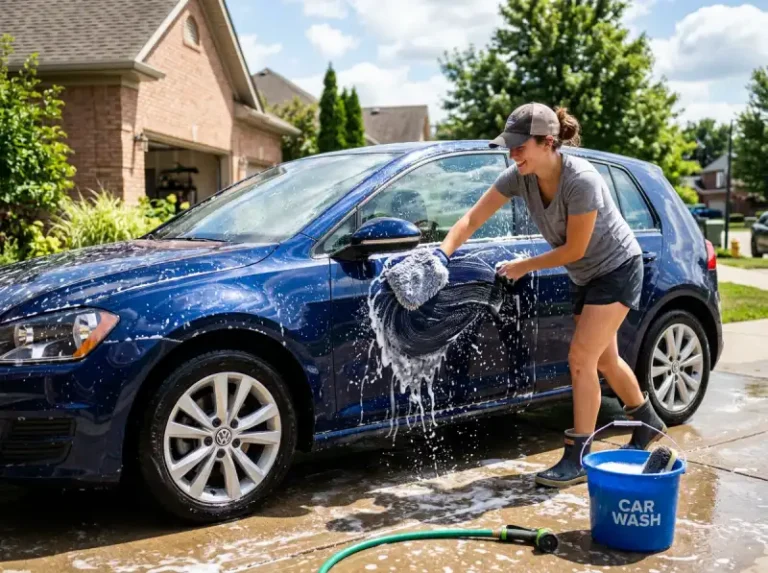
2. Use a high-quality microfiber wash mitt, never a stiff brush.
3. Start washing from the top of the car down.
4. Gradually and gently rinse your mitt after every single panel.
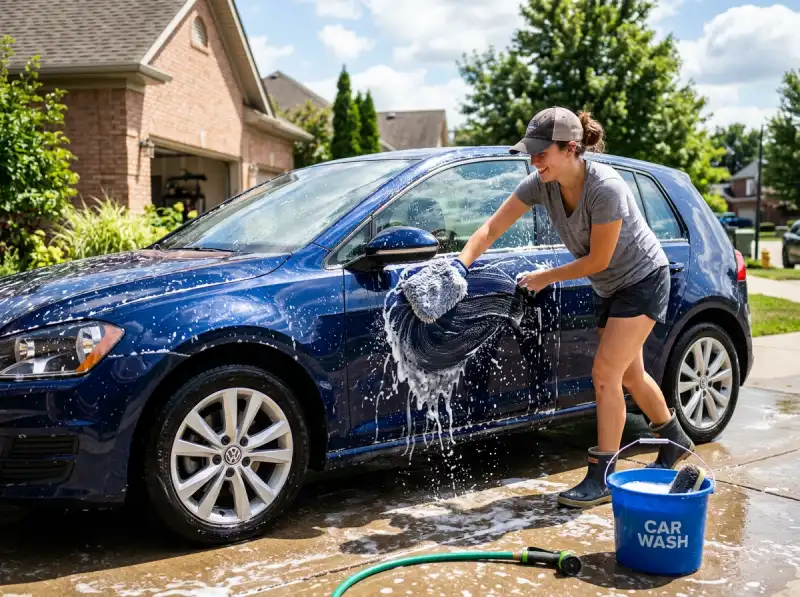
The “top-down” washing method prevents you from carrying heavy dirt from the lower panels up to the hood. It’s a small change in technique that saves countless panels from scratching.
Struggling with split ends that never go away?
“I couldn’t understand why my paint wouldn’t keep its showroom shine. It was constantly covered in swirls. I swapped my harsh sponges for microfiber mitts and started using a dedicated pre-wash foam. Months later, the difference is night and day. My paint is finally glossy and looks so much newer.”

3. Your Storage Style And Daily Parking Can Cause Damage.
The friction from cheap car covers and the tension from automatic car wash brushes are silent sources of scratches. Tossing a cover on a dirty car creates friction, while tight plastic brushes drag dirt across the paint. Choosing gentle storage and washing methods is a simple way to protect your paint daily.
Switch to a high-quality microfiber wash mitt to provide a smooth, friction-free surface.
Avoid automated brush car washes. Opt for hand washes or touchless washes instead.
Never wipe dry dust off your paint with a dry towel; always use a quick detailer spray.
Want a simple rule? Treat your paint with mechanical kindness. That’s how you stop scratches before they start and allow your paint to finally shine.