Stop Scrubbing Your Paint And Start Pre-Rinsing Your Car: A Guide to Scratch-Free Washing
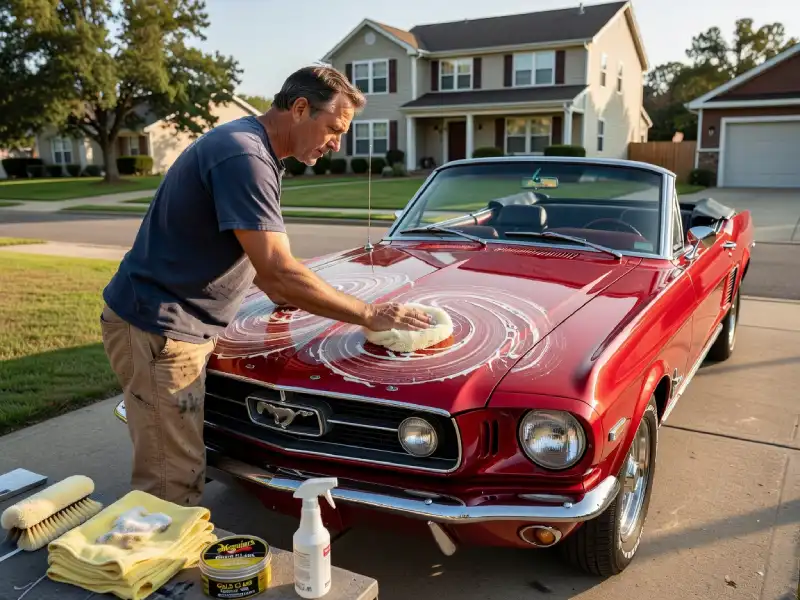
If you’re stuck in a frustrating cycle of finding fresh swirl marks and tiny scratches every time you wash your car, the problem isn’t your paint’s durability. It’s that you’re focusing on the sponge—the tool doing the rubbing—while ignoring the microscopic dirt particles underneath. The result is the same: you spray clarifying detailers that only mask the damage, never solving the underlying issue of poor washing technique.
The fix is a different product; it’s a different technique. When you start treating your car’s clear coat like a delicate surface—with pre-rinsing and lubricated washing—you create a foundation for paint that is naturally glossy, scratch-free, and truly clean.
The Many Ways Safe Washing Is The True Secret To Flawless Paint.
Your clear coat is a highly sensitive, ultra-thin protective shield. When this layer of defense is rubbed with trapped dirt, micro-scratches, swirl marks, and oxidized spots create a layer of dullness that blocks light reflection, leading to issues like dullness, flat spots, and even premature clear coat failure. You can’t have a deep, mirror-like shine without a scratch-free surface.
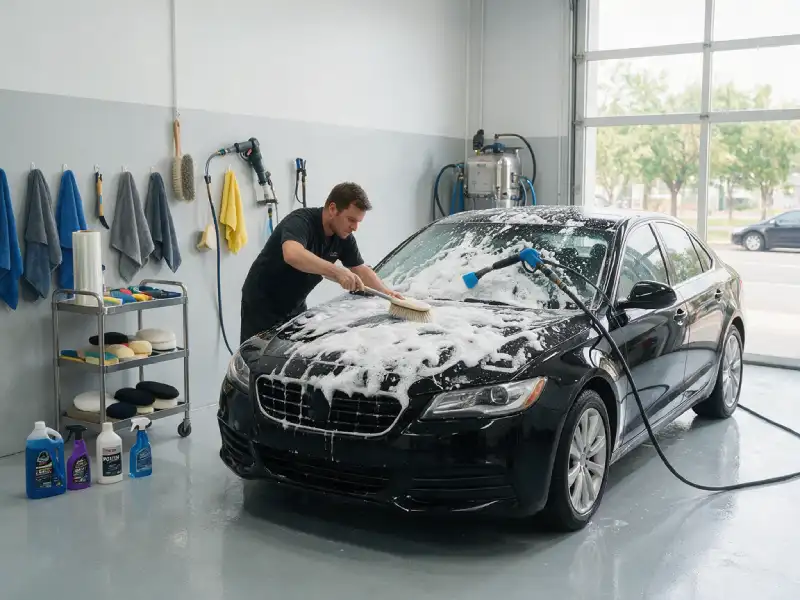
Think of your car’s paint like a sheet of polished glass. You can’t grow healthy, vibrant gloss on a surface that is constantly dragged, scratched, and neglected. You have to lubricate the surface first. Similarly, to get a deep, show-car shine, you must first cultivate a clean and scratch-free clear coat.
Below are three simple “pillars” for scratch-free washing: lubricating with the right technique, incorporating regular pre-rinsing, and understanding that drying is for water, not for rubbing.
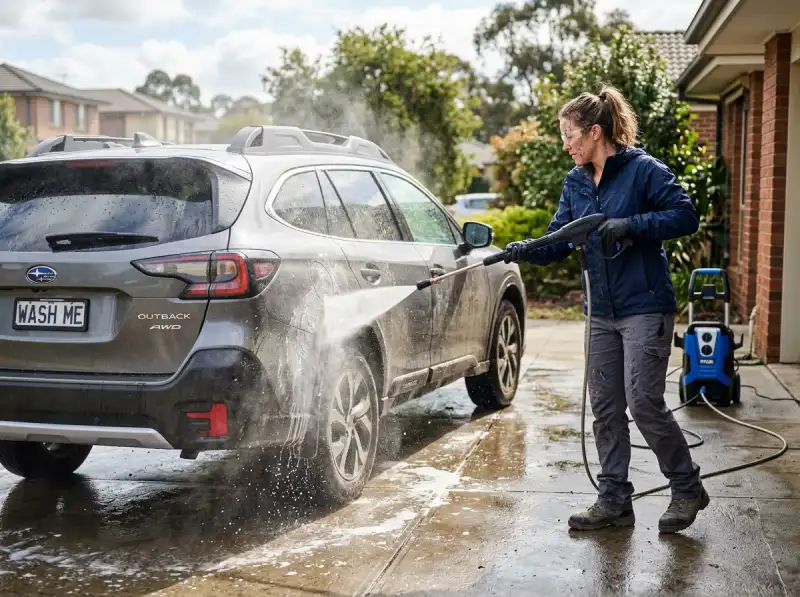
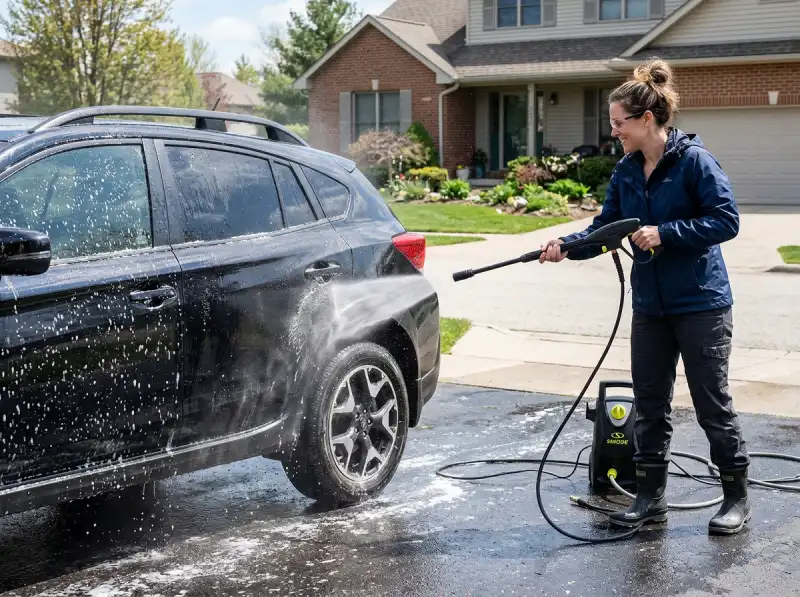
1. Soap Is For Lubrication; The Water Pressure Is For Dirt.
Most people apply car soap all over their vehicle and start scrubbing vigorously. This often grinds abrasive road grit directly into the clear coat and permanently scratches the finish. The correct technique is to focus the wash mitt exclusively on lubricated panels, where the risk of scratching is lowest.
“You must lubricate the surface, not scrub the dirt. Take a generous amount of car shampoo, foam it up on the panel, and use the weight of the wash mitt to glide over the paint for half a second. The suds that run down are more than enough to safely lift and carry away the grit.”
Trichologist Dr. Anabel Kingsley
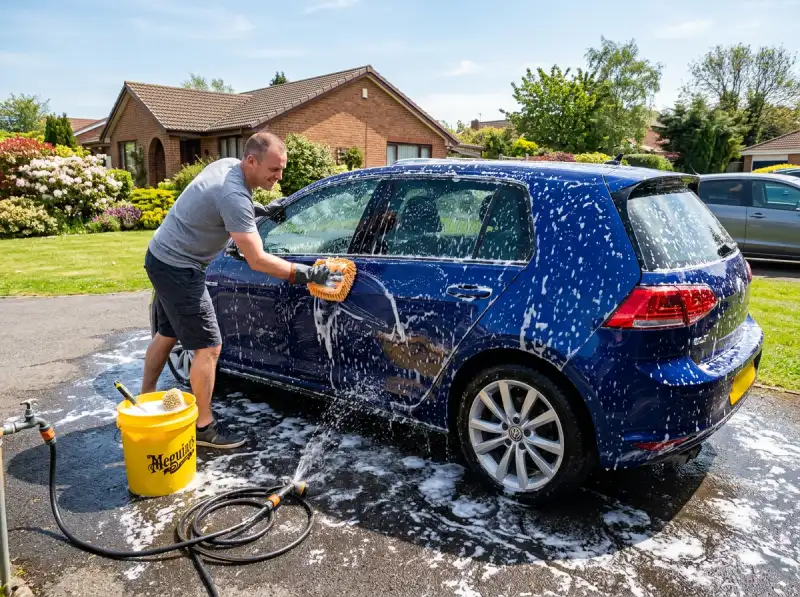
Letting the pre-wash foam dwell on the paint for a full minute is key. It helps to break down road film, softens stubborn dirt, and ensures the wash mitt glides smoothly. This simple change can dramatically reduce scratches on the hood and doors.
2. The Two-Bucket Method Is The Reset Button Your Paint Needs.
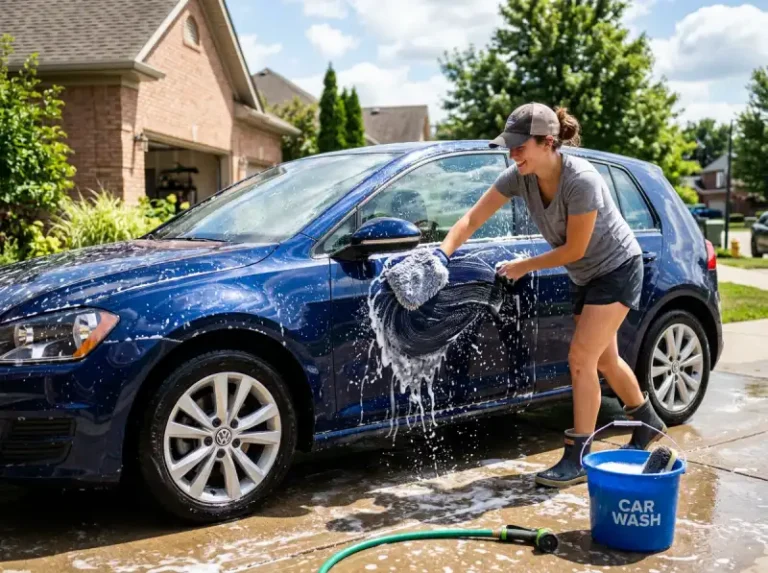
Just like any delicate surface, your clear coat benefits from constant rinsing. Standard one-bucket washing simply moves trapped dirt back onto your car’s finish. The most useful approach is to use the two-bucket method as a safety net, keeping your wash mitt clean and preventing dirt from being dragged back across the paint.
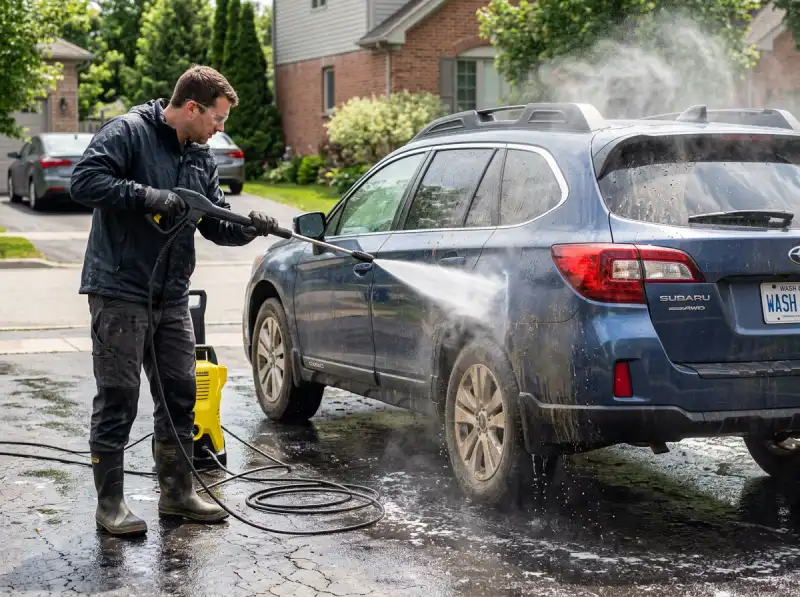
1. Before touching the paint, use a pressure washer to remove loose grit.
2. For heavy dirt, use a dedicated pre-wash foam to soften road grime.
3. Use one bucket for soapy water and one bucket filled with clean rinse water.
4. Glide the wash mitt gently across the panels without applying heavy pressure.
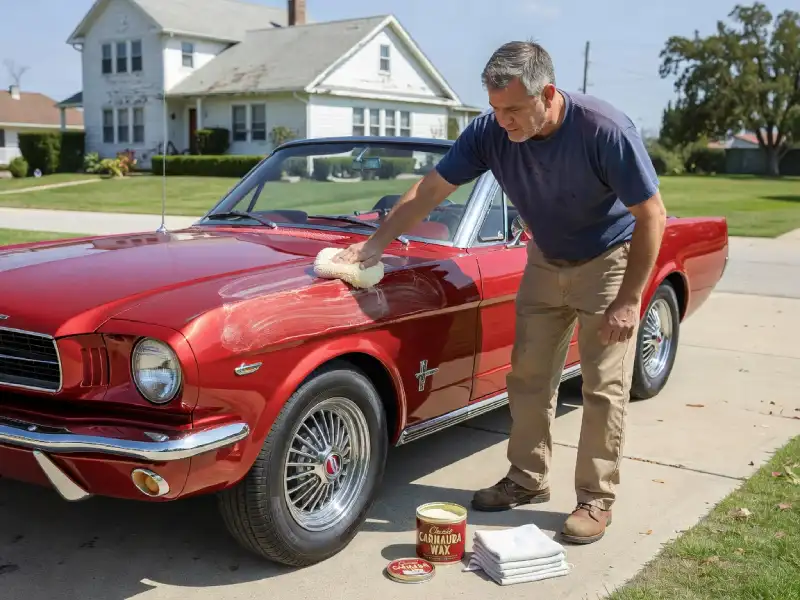
Once you start using the two-bucket method, you’ll notice your paint retains its deep gloss and feels smoother for longer. It creates a perfect canvas for your wax or ceramic sealant to do its job effectively.
Swirl Marks And Dull Paint? Your Wash Mitt Might Be The Problem.
“I thought my paint was just cheap and easily damaged because it looked so dull in the sun. I started using a foam cannon and switching to a clean wash mitt for every wash. Now, I can go months between polishes and my car’s paint has never had more depth.”

3. Drying Towels Are For Patting, Not For Rubbing.
Dragging a dry, stiff towel across your freshly washed car is one of the biggest causes of micro-scratches. Your paint requires lubrication even during the drying phase. Using a dedicated drying aid or quick detailer minimizes the friction, protecting the most sensitive parts of your clear coat.
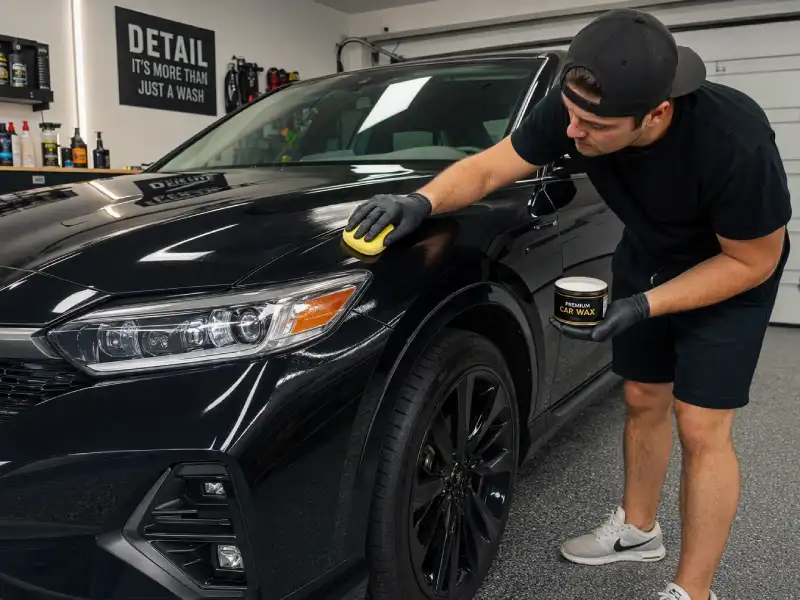
After washing, gently mist a drying aid or quick detailer over the wet panels.
Lay a plush microfiber towel flat across the panel and pat it dry, avoiding hard rubbing.
Use a blower or compressed air to clear water from mirrors, emblems, and tight cracks.
Want a simple rule? Treat your paint like a delicate mirror and wash it like a fine piece of glass. That’s how you build the foundation for a swirl-free finish from the roof down to the wheels.